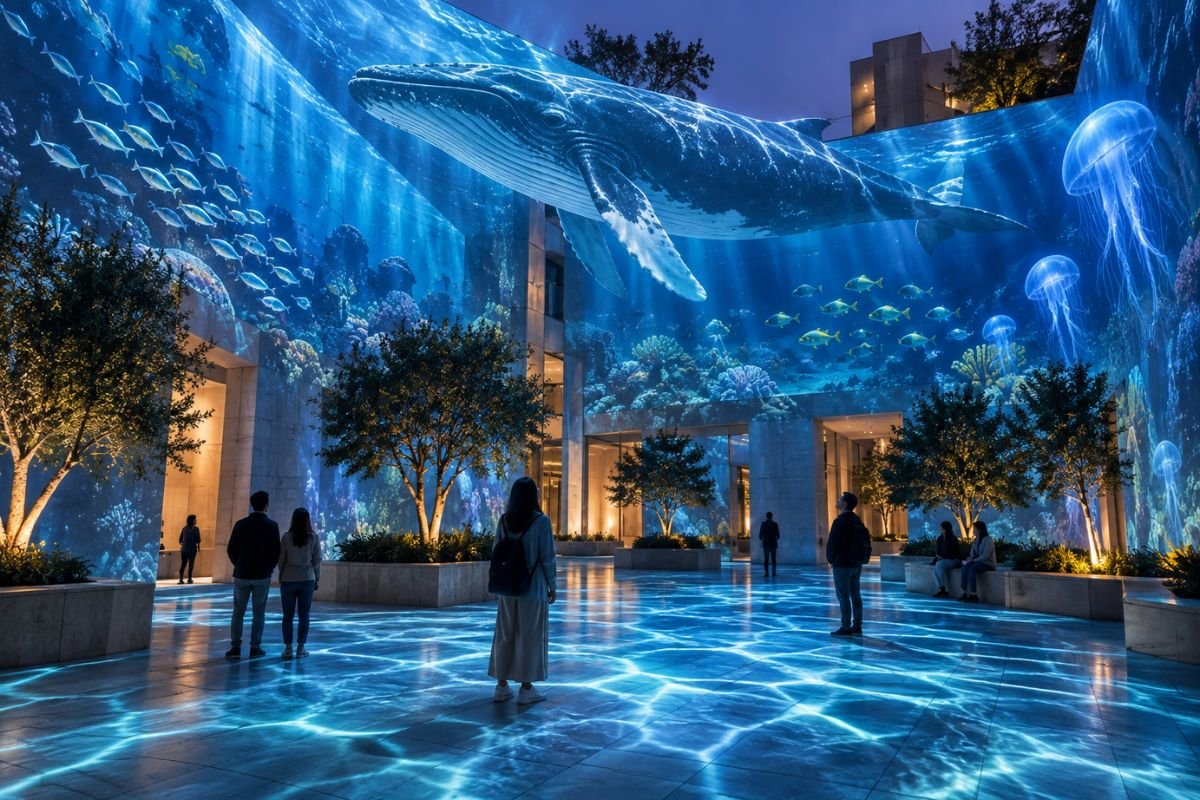
An outdoor courtyard in Washington, D.C. transforms after dark. Whales are seen at large scale, penguins swim through projected waters, sea lions traverse kelp forests, and bioluminescent marine life emerges where there was something else completely in the daytime.
The immersive ocean experience has been named Wonders of Our World: Ocean, and was made by Moment Factory as a nighttime attraction for the newly opened National Geographic Museum of Exploration. It is a 17-minute experience that opened alongside the museum on June 26, 2026, transforming the museum’s courtyard into an immersive world of imagery, motion, light and sound.
The Ocean Does Not End with One Image
The ocean experience does not display footage of the ocean in the form of a traditional film.
Projection of video imagery occurs across the courtyard and even the glass structure of the museum. Accompanying this are dynamic lighting, music, and spatial sound. Imagery includes footage captured by National Geographic Explorers as well as visual effects used to allow colors, textures and motion to extend beyond the boundaries of a single frame.
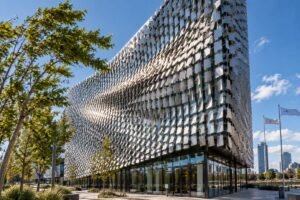
Moment Factory’s work with the building’s floor-to-ceiling smart glass has allowed projection to be added as a layer of visual surface that allows for shifting between transparency, depth and illusion, rather than just being a flat projection surface.
This means that the architecture becomes an element of the experience. Rather than entering a purpose-built theater and focusing on one image, visitors remain in an already-existing outdoor space that becomes transformed around them.
View this post on Instagram
Visitors Have Interactive Elements With Marine Life Prior to the Show
Not all of the experience takes place during the main 17-minute presentation.
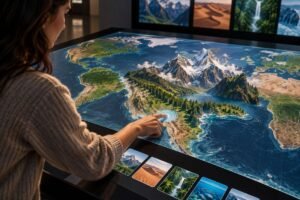
Floor projections have been made reactive to allow for interaction by visitors with representations of marine life below them. The museum has described interactions with whales, penguins, sea lions and bioluminescent marine animals as elements of the experience.
This interactivity creates a difference in the relationship with the imagery that goes beyond viewing it.
The main presentation will guide where visitors’ attention should focus with its series of projections, sound and lighting. The floor interaction restores some of this control to the visitor, adding movement and playfulness before the full audiovisual journey commences.
A Museum Experience Starting When the Sun Sets
Wonders of Our World: Ocean is unusual in that visitors do not need an admission ticket for the museum to see the show.
It is ticketed separately and takes place outdoors in the Museum of Exploration Courtyard. It opens 15 minutes after sunset and allows visitors to access the courtyard 15 minutes prior to the presentation start.
Timing is crucial for the experience. In daylight, the courtyard is merely an architectural element of the museum. Darkness allows these surfaces to transform into a larger visual composition.
Effectively, this gives the museum two identities in one space. One identity is active during regular visiting hours. The second one emerges with projection, lighting and sound taking over the courtyard after dark.
Making Ocean Exploration Immersive in a Physical Space
This is an element of an even bigger transformation for National Geographic.
The Museum of Exploration opened in Washington in June following nearly four years of work on the organization’s headquarters. National Geographic’s well-known photography and exploration stories have traditionally been told through images displayed on walls. This museum includes interactive and immersive experiences in telling these stories.
Wonders of Our World: Ocean moves this concept outside.
Visitors are not going to dive underwater or encounter a whale in the open sea. The change lies in the scale and surroundings of the imagery experienced. Footage that would normally go to a television, phone or documentary screen has been extended to the physical courtyard with sound and light surrounding the visitors.
And this difference is what makes the immersive ocean experience unique. The ocean is located elsewhere, but in the 17 minutes after sunset, the architecture of Washington has been designed to bring it somewhat closer.