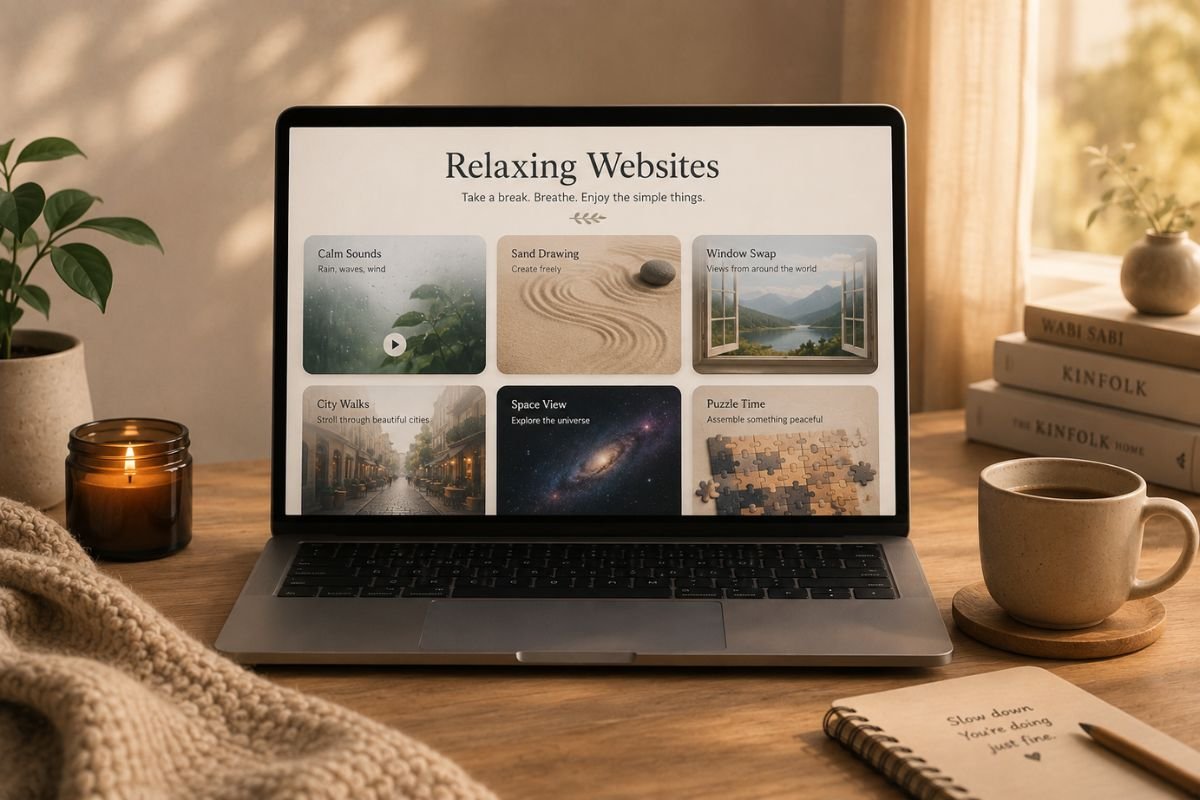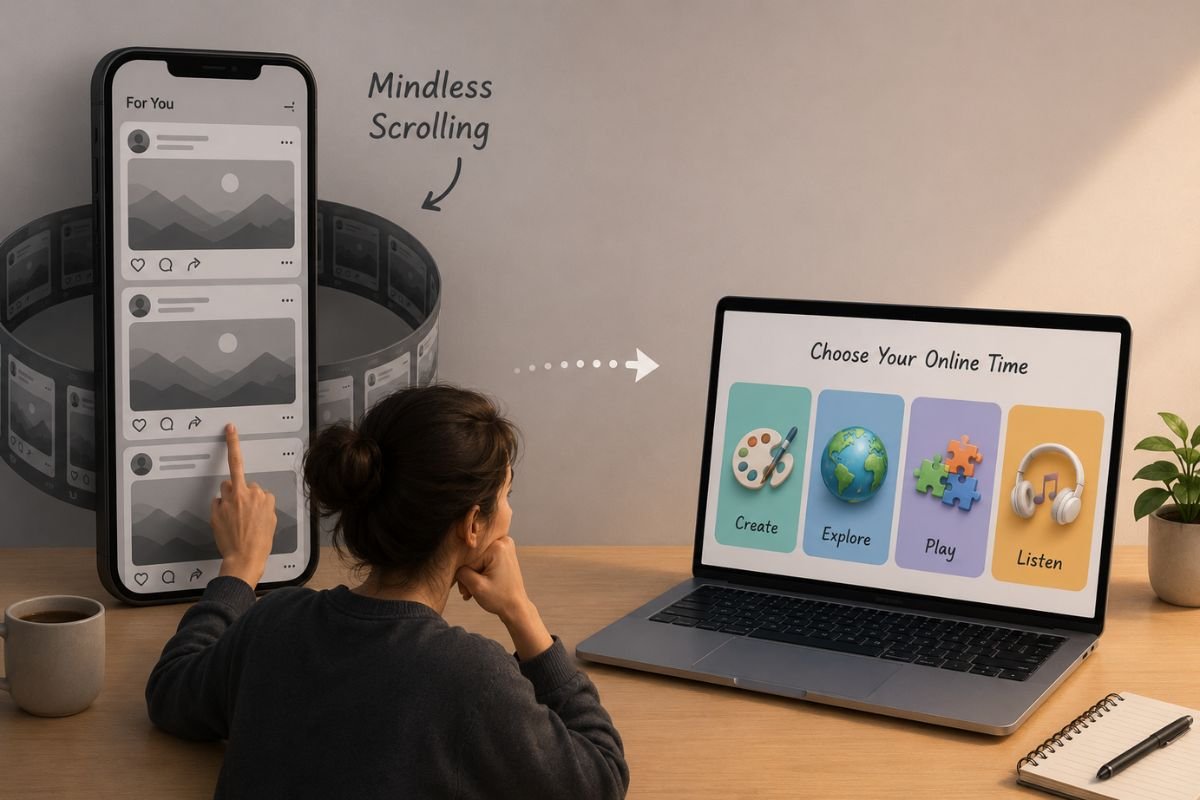

Being at home can feel incredibly relaxing until you realize you have spent forty minutes rotating between the same three apps.
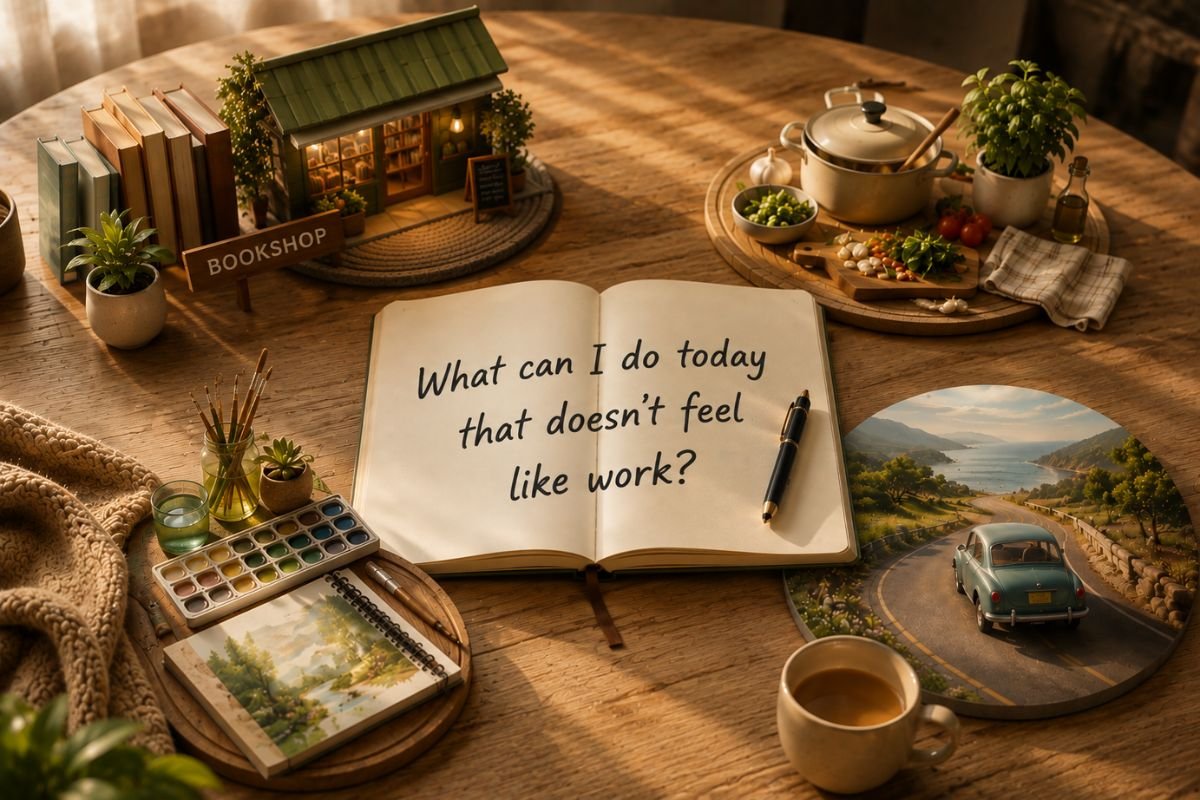
Fortunately, finding something better to do does not require turning the evening into a project. Your home is already full of possibilities: a kitchen, books you forgot you owned, half-used art supplies, a comfortable chair, perhaps a balcony, and probably at least one thing you once bought because you were convinced you would use it.
The question is not how to make the evening productive. It is what would feel good to do with it.
Cook Something You Normally Buy
There is cooking because everyone is hungry, and then there is cooking because spending an hour in the kitchen sounds enjoyable.
Choose something you normally buy ready-made and try making it yourself. Pizza dough, bread, fresh pasta, dessert, or a favorite snack can give you enough chopping, mixing, kneading, or assembling to keep your hands occupied.
Do not choose the most complicated recipe you can find. You are looking for something enjoyable to make, not an audition for a cooking show.
And if the pizza comes out slightly misshapen, it is still pizza.
Rediscover Something You Already Own
Homes have a remarkable ability to accumulate entertainment and then hide it in plain sight.
There may be a book you bought and never opened, a board game at the bottom of a cupboard, an old console, forgotten magazines, art supplies from a brief creative phase, or a puzzle that has been waiting several years for its moment.
Before looking for something new to do, look around.
Pick up one neglected thing and give it half an hour. You may remember exactly why you bought it in the first place.
Make One Corner More Comfortable
Redesigning an entire room sounds like work. Moving one chair does not.
Choose a small part of your home and experiment with it. Move a chair closer to the window. Clear a crowded side table. Rearrange a shelf. Give a plant a better spot or turn an unused corner into somewhere you would actually want to read.
The satisfying part is how quickly the room responds. Move a few things and a familiar space can suddenly feel slightly different.
Stop when you like it better.
Start a Puzzle You Don’t Have to Finish
A jigsaw puzzle works particularly well at home because it can simply remain where you leave it.
Spend twenty minutes searching for one stubborn piece tonight and return three days later. Nothing needs to be packed away simply because you did not reach the end.
The same idea works with model kits, LEGO builds, crosswords, and other projects that tolerate being abandoned halfway through.
Five pieces are fine. Fifty are fine.
The box will wait.
Have a Movie Night Where You Actually Watch a Movie
There is a familiar streaming ritual: open the app, scroll for half an hour, watch several trailers, reject everything, and eventually decide it is too late to start a movie.
Skip that part.
Choose something before you sit down, or give yourself a simple rule. Rewatch an old favorite. Pick a decade you rarely explore. Choose a director you are curious about, or let someone else decide.
Then make the movie the thing you are doing. Get something to eat, make yourself comfortable, put the phone somewhere less convenient, and start at the beginning.
It does not need candles, themed snacks, or an elaborate “movie night” setup.
It just needs a movie.
Make Something That Doesn’t Need to Be Good
Creative activities become easier when the finished object does not matter very much.
Draw something in the room. Paint without knowing what the picture is supposed to become. Try origami. Cut up old magazines for a collage, decorate a notebook, or photograph ordinary objects from strange angles.
You do not need to discover a hidden talent.
The crooked paper animal, terrible sketch, or inexplicable collage may exist for one evening and then disappear into the recycling bin.
The hour you spent making it still happened.
Listen to an Entire Album
Music is everywhere, yet it is surprisingly easy to go days without really listening to it.
Choose an album you love or one you have been meaning to hear and start with the first track.
You do not necessarily have to sit motionless beside the speakers. Cook, draw, work on the puzzle, or do something else that leaves enough attention for the music to remain present.
An album gives the evening a natural stretch of time. It begins, develops, and eventually ends, rather than quietly becoming another endless playlist in the background.
Do Something Slowly on Purpose
Home gives you the chance to slow down something you normally rush through.
Make coffee without trying to finish it as quickly as possible. Cook breakfast in the afternoon. Sort through old photographs. Water your plants carefully. Write something by hand.
This is not an invitation to turn ordinary chores into three-hour rituals. Emptying the dishwasher at half speed is unlikely to reveal a new philosophy of life.
Choose something you already enjoy and, for once, remove the hurry from it.
Step Outside Without Going Anywhere
If you have a balcony, patio, yard, rooftop, or garden, use it even when you have no particular reason to be there.
Take your coffee outside. Read a few pages. Eat there instead of at the table. Sit outside after dark and listen to whatever is happening around you.
You have barely gone anywhere, but the next half hour can feel surprisingly different from the one before it.
Even without an outdoor space, an open window and a chair nearby can change the atmosphere of a familiar room.
Let Yourself Change Your Mind
One of the nicest things about relaxing activities to do at home is how easy they are to abandon.
You can cook without becoming a better cook, draw without becoming an artist, read without finishing the book, or put twelve pieces into a puzzle and leave the rest for another day.
Choose whatever sounds good now.
When it stops sounding good, stop.